16 June: Venezia and Murano
Our last day in Italy. We were flirting with the idea of going to a different village about an hour away -- ironically the one we accidentally ended up in when we first arrived. Then Pam suggested I look for tickets to the Basilica San Marco. Sure enough, I found tickets for 1:30. No long bus rides to a hopeful wildcard of a village.
We had time to kill and still wanted to get bus number 5 burned into our muscle memory for the following day's early airport run. The goal was for catching that bus to feel as automatic as breathing. Thankfully it was still easy to breathe, and the bus ride into Venezia was fantastic. We were back on the island by 11am with a couple hours before the Basilica.
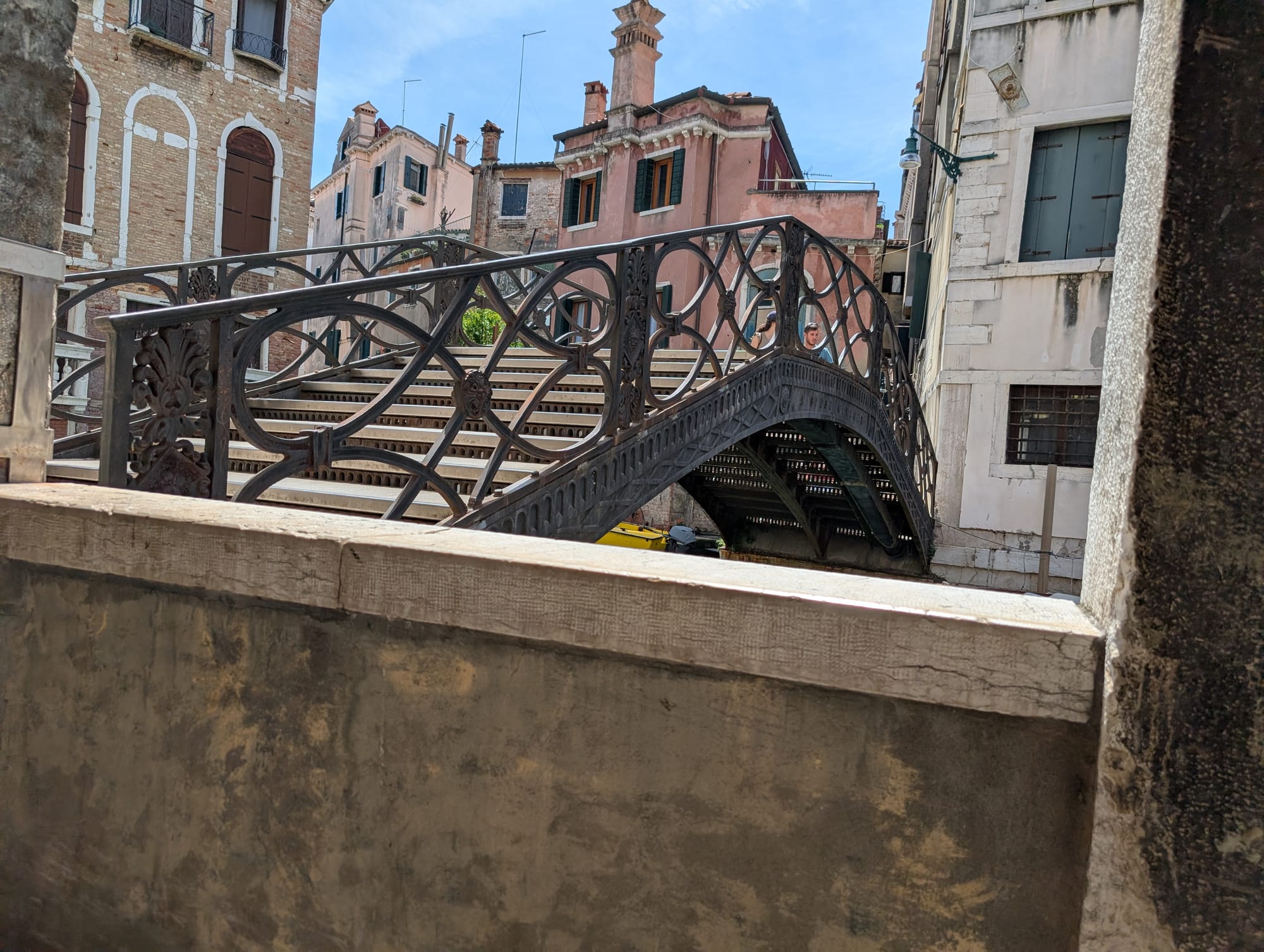
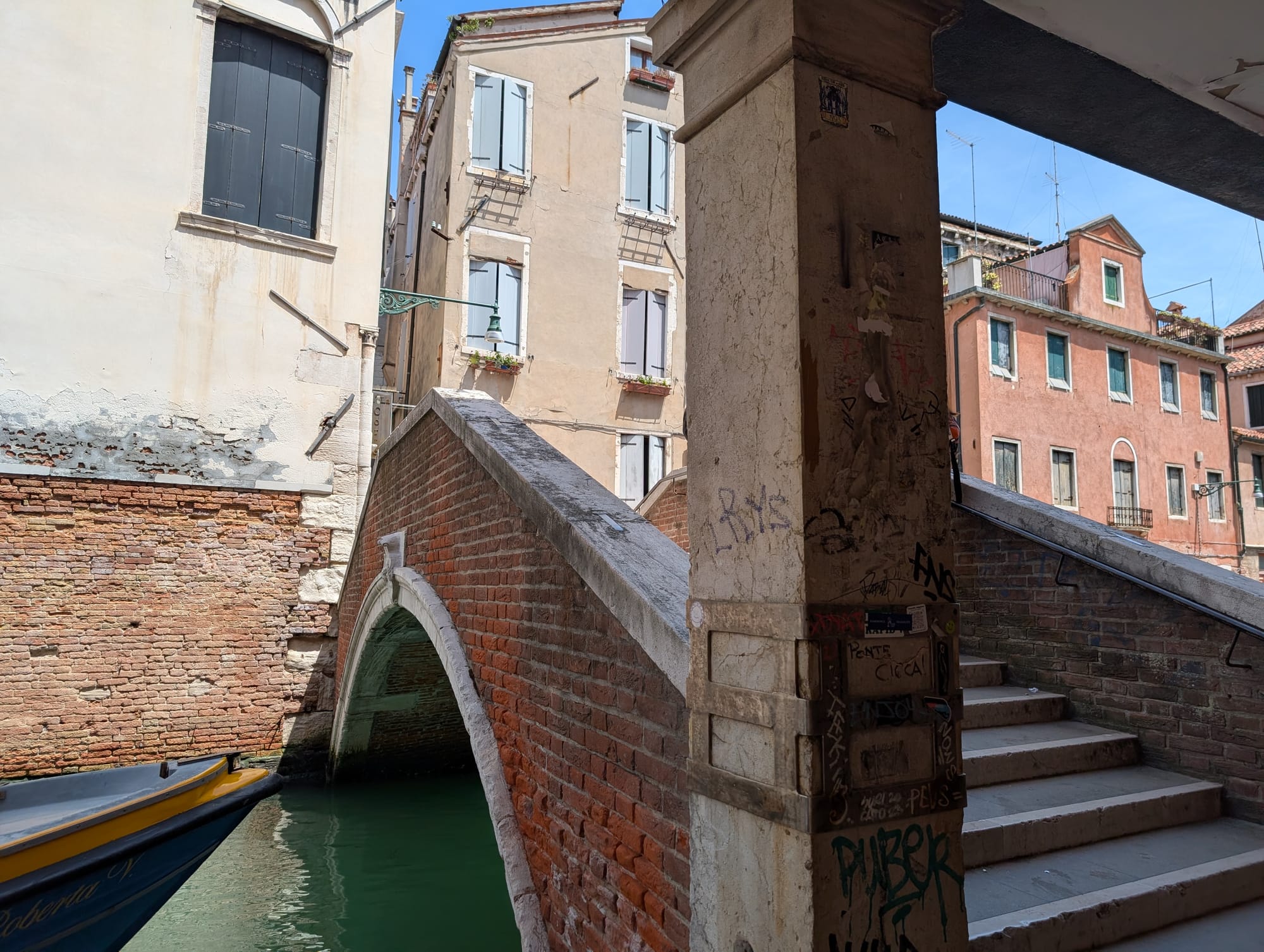
Yesterday's post mentioned the big Mission Impossible bridge. I remembered there was at least one other bridge from the movies, so I hunted them down. Getting there took us through a part of the city we hadn't seen yet, which was the whole point. Venice has 391 bridges. Two of them got famous the hard way. Ponte dei Conzafelzi and Ponte Minich, both tucked into the narrow backstreets of the Castello district, served as the backdrop for fight scenes in Mission Impossible: Dead Reckoning. Finding them required navigating some genuinely confusing alleys, which felt appropriately on brand for a spy movie location. They're small, quiet, and completely unremarkable until you remember that Tom Cruise was here doing things no reasonable person should do. We took pictures. Nobody got shot.
From the bridges to the Basilica was a short walk. We had time to stop for a bite and rehydrate. I tried a blond Italian beer. I liked it. We also had the best caprese I have ever eaten. The mozzarella ball had just enough outer skin to hold itself together. The moment you cut into it, it melted onto the plate. Not long after we sat down, a couple took the table next to us and we struck up a chat. It was fun, right up until they wouldn't stop talking and we had to make a hasty retreat to make our 1:30 tickets.
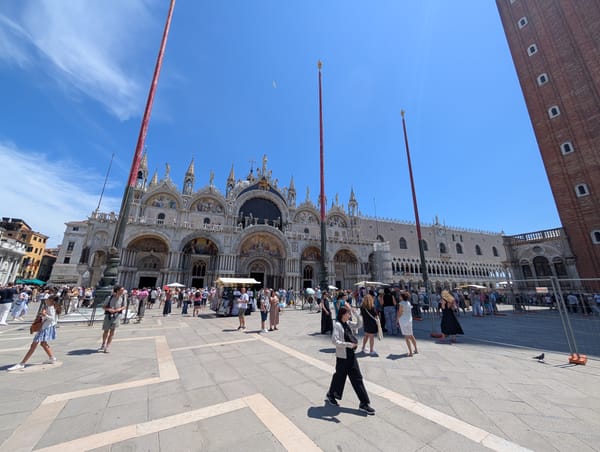
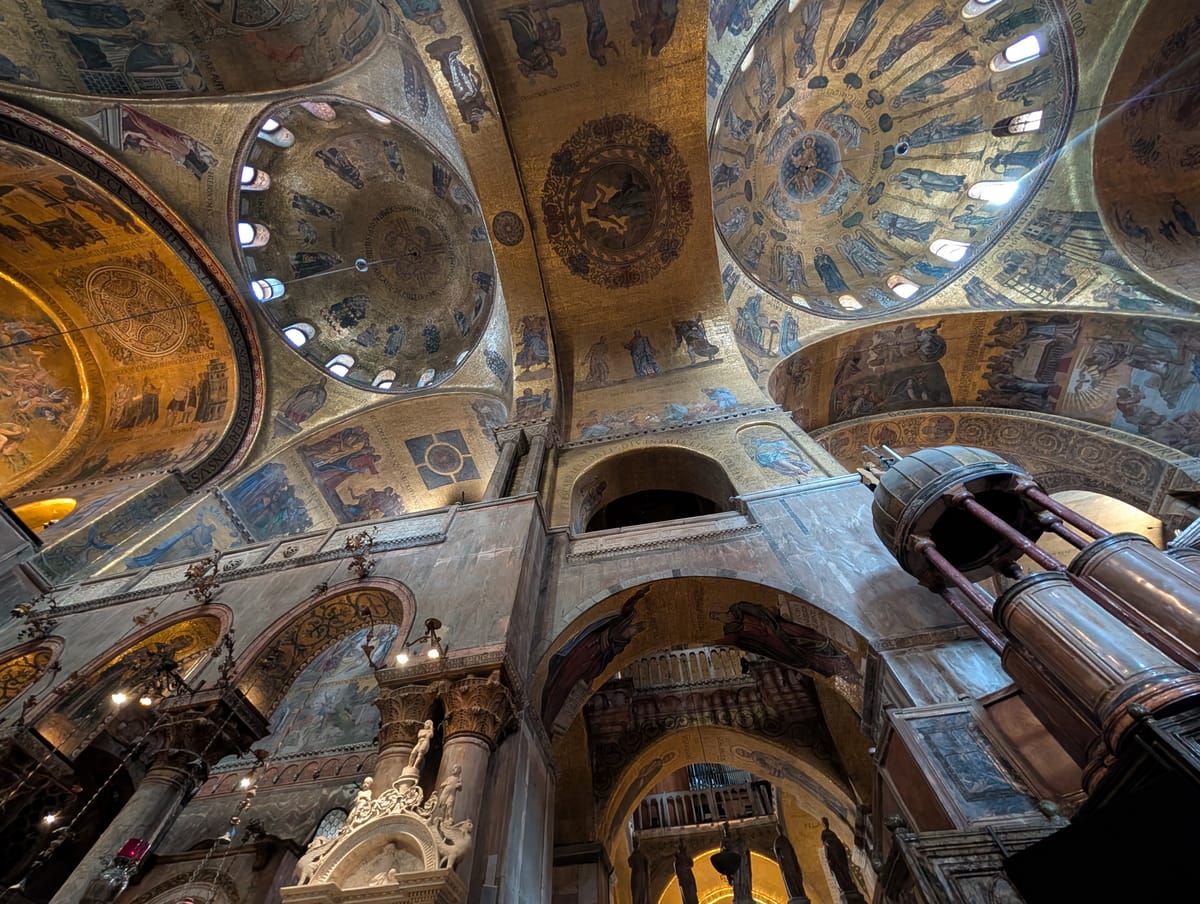
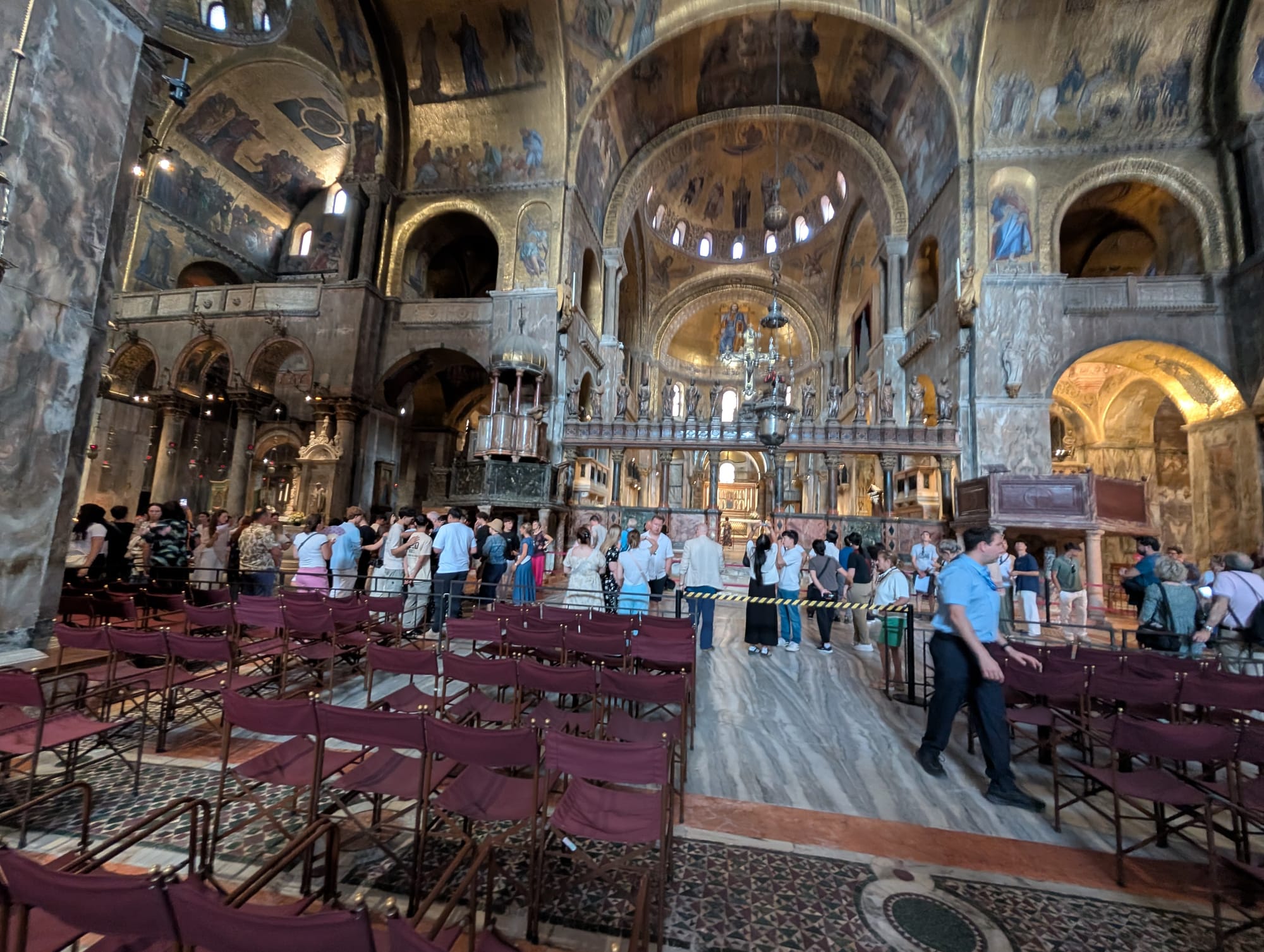
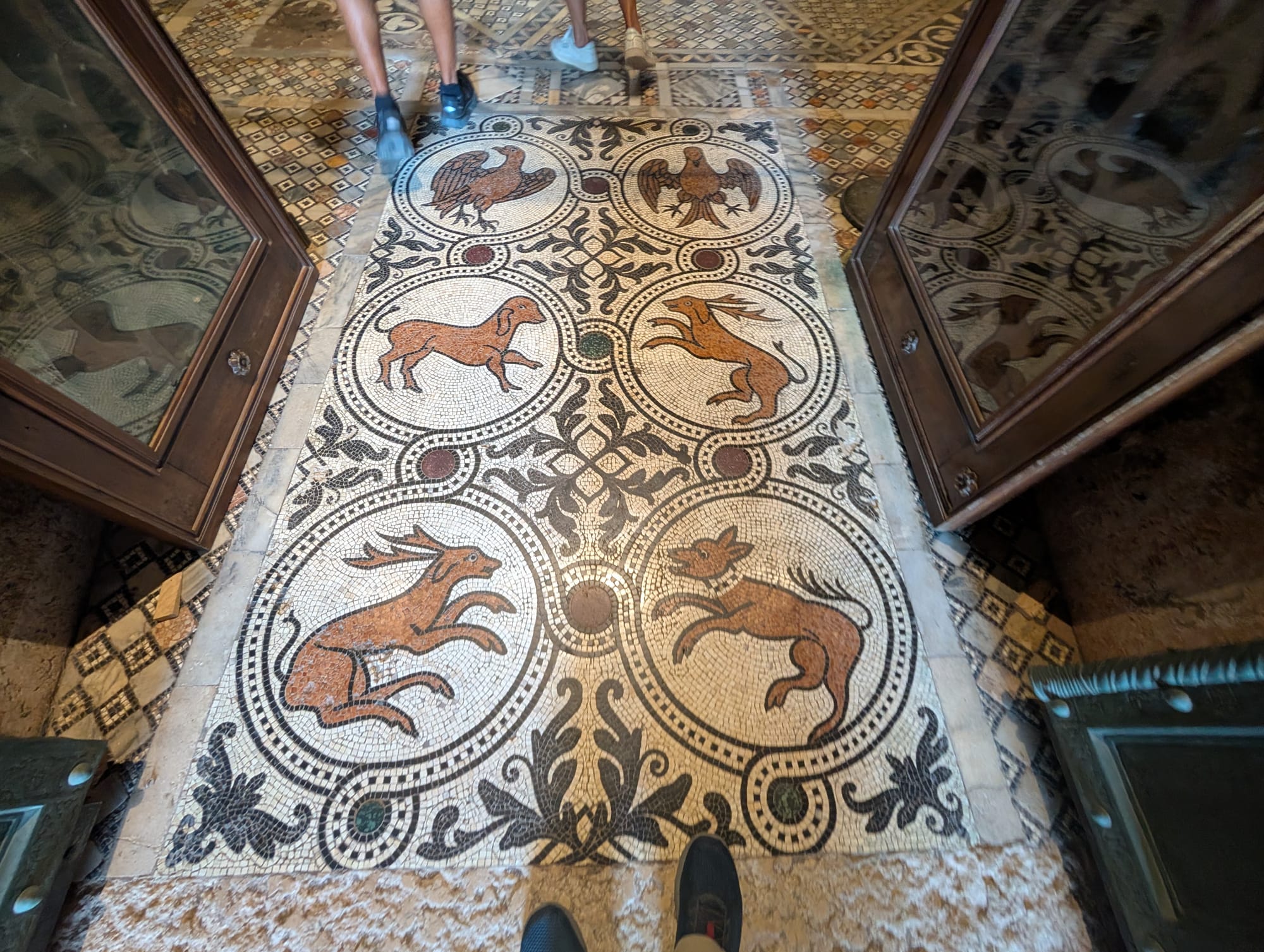
I wrote about the outside of the Basilica yesterday. The interior is another thing entirely. San Marco has been accumulating gold and glory since the 11th century. The ceiling alone covers over 8,000 square meters of mosaic, all of it glittering in gold tile, depicting biblical scenes in the Byzantine style that Venice borrowed heavily from Constantinople. The short version is that Venice looted a lot – marble columns, bronze horses, decorative panels, all hauled back from the Fourth Crusade in 1204. The Venetians were enthusiastic and unapologetic about the whole thing. The result is one of the most elaborately decorated interiors in the world, a building that feels less like a church and more like someone convinced God himself to move into a jewelry box.
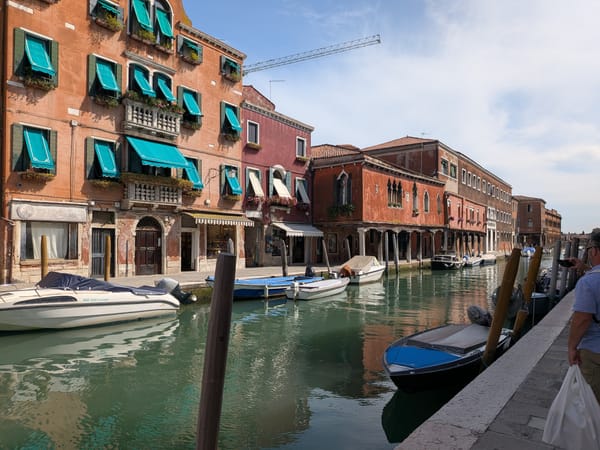
After the Basilica, Pam suggested Murano island. I didn't know anything about Murano. She said something about glass. That shook a memory loose but nothing fell out. We figured out the boat bus system, about as confusing as the land bus system, by the way, and made it over.
While we were in transit I took the opportunity to remind myself what Murano glass actually is. Here's the short version of why it's a big deal:
In 1291, the Venetian government ordered all glass furnaces moved to Murano, officially for fire prevention. Venice's wooden buildings were a real risk. But the move also let them lock down the trade secrets tight. Master glassmakers got rare perks: they could carry swords and marry into the nobility. But they were forbidden from leaving Venice without authorization. Penalties for doing so ranged from property confiscation to, in some cases, death. Golden cage, literally.
So when you see Murano glass for sale in Venezia, you're looking at 700+ years of fiercely protected craft. The markup is real, but so is the history behind it.
The island itself looked older than Venice proper, which is saying something. Every other door was a glass shop. The economy there runs on exactly two things: food and glass. If you needed anything else, the vaporetto back was right there. We made a couple of stops before calling it on Murano.
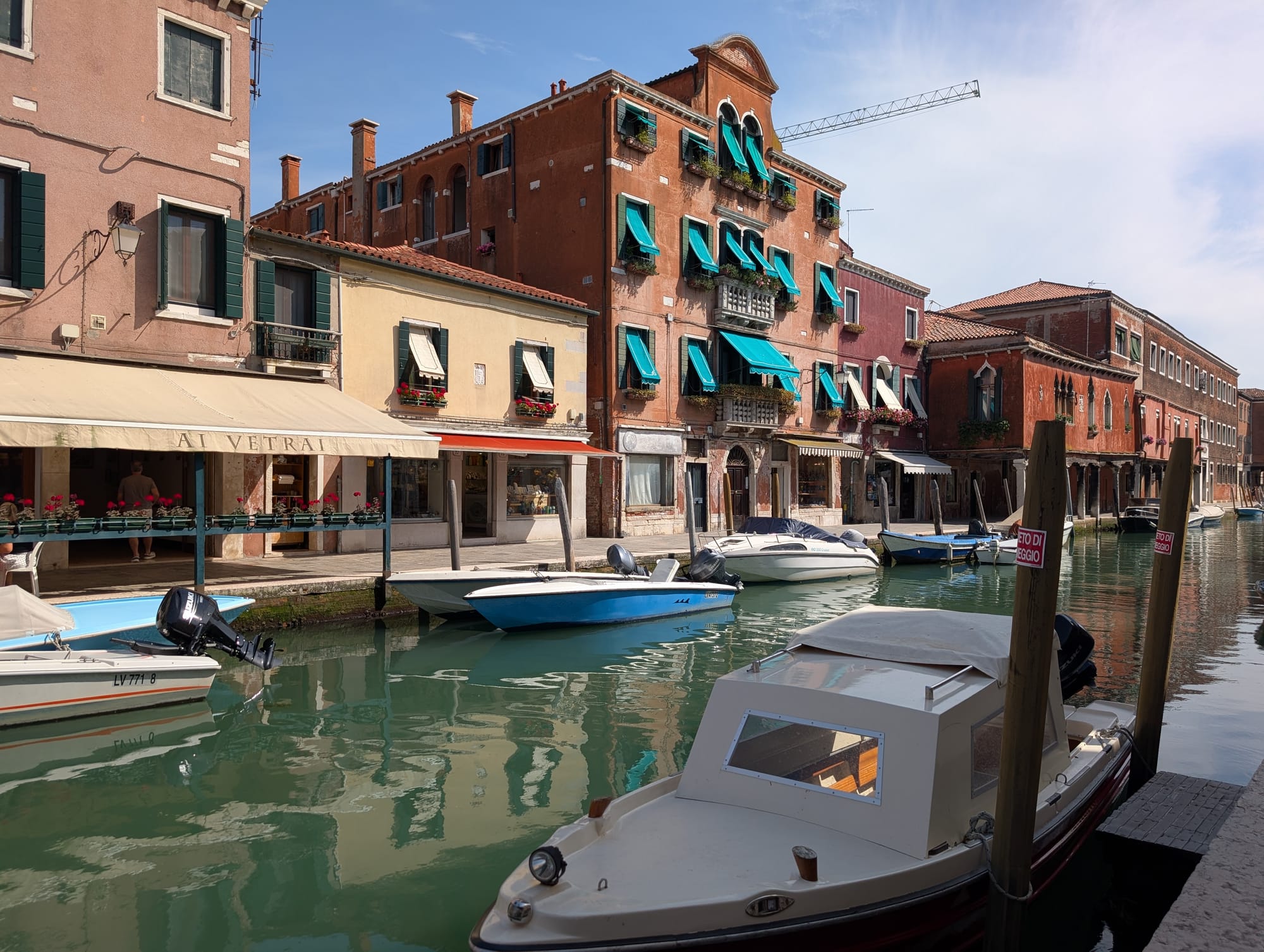
The boat bus back was standing room only, shoulder to shoulder the whole way. An absolutely miserable experience. But better to get the travel chaos out of the way before tomorrow. Our rhythm for this whole trip had built in a travel day at the end of each city, and we had to keep the cadence alive even here. The silver lining was that the vaporetto dropped us right at the bus station.
Before heading back for the night we grabbed dinner. I wish I could say it was great. We chose poorly. The pasta dish I had was something I could have pulled from the Safeway freezer section back home. Ugh. But of all the great food and fantastic experiences this trip had, one overpriced letdown at the finish line wasn't going to touch any of it.
Hello, bus number 5. Take us home. Packed bags by the door, nothing left to do but wake up and leave.
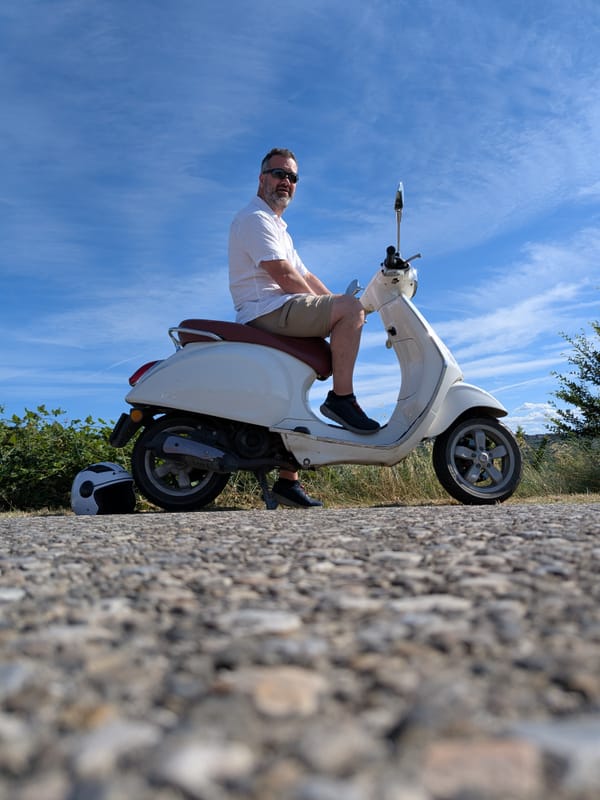
Italy turned out to be the kind of trip where things go sideways just often enough to make the good parts feel earned. We got on wrong trains, sweated through cities without water, ate ourselves into regret, and navigated a Venice bus system that seemed designed by someone who actively dislikes tourists. And somehow none of it matters. What sticks is the pizza in Naples that ruined all other pizza. The Vespa ride through Tuscan hills where no words could do it justice, so I'm not going to try. The Sistine Chapel ceiling after the long march to get there. Murano glass locked down for 700 years because apparently the Venetians had very strong feelings about intellectual property. You take the misadventures with the magic and the ratio ends up in your favor. That's the deal with travel. Pam and I knew that going in from the last trip, and Italy was good enough to remind us all over again. Bus number 5, packed bags, and home.